No Products in the Cart




Individually Quick Frozen (IQF) technology is a game-changer for preserving everything from food to sensitive biological materials. At its core, it freezes items individually instead of letting them clump together into a solid block. This is achieved through ultra-rapid cooling, a process that locks in the original quality, texture, and nutritional value of each piece, whether it’s a raspberry for a smoothie or a critical cell sample for research.
Ever tried to grab a handful of frozen berries only to pull out a single, solid brick of ice you have to chip away at? That clumping is a classic side effect of traditional freezing methods. Individually Quick Frozen (IQF) technology was designed specifically to solve this problem, offering a far more sophisticated approach to preservation.
Here’s a simple way to picture it: conventional freezing is like a crowd trying to rush through a single door all at once—they just jam together. The IQF process, on the other hand, is like an orderly queue where each person goes through one by one. This separation is what makes IQF products so much easier to handle, portion out, and use right from the freezer.
The real magic of IQF lies in its speed. By freezing each item incredibly quickly, it stops large, destructive ice crystals from forming inside the product’s cells. When freezing happens slowly, those jagged ice crystals act like tiny knives, puncturing cell walls. The result? A mushy texture and a loss of flavour and nutrients once thawed.
IQF’s rapid-freeze process creates minuscule microcrystals that leave the cellular structure completely intact.
This commitment to quality has made IQF a cornerstone of the modern food industry, and its economic impact is massive. In Germany alone, the Individual Quick Freezing (IQF) market was valued at USD 2,035.5 million and is expected to hit USD 3,433.48 million by 2033. That’s a compound annual growth rate of 6.01%, a clear indicator of how vital this technology has become. You can explore more data on the German IQF market to see its impressive growth trajectory.
The core benefit of the Individually Quick Frozen IQF method is its power to lock in peak freshness and cellular integrity. This doesn’t just mean better quality for consumers; it dramatically cuts down on food waste by enabling precise portion control and significantly extending shelf life.
Beyond the food world, these same principles are absolutely critical in high-stakes scientific fields. The ability to preserve individual biological samples—like vials of cells or tiny tissue specimens—without damaging their viability is non-negotiable for:
In these fields, the precision of IQF isn’t just a matter of convenience. It’s a fundamental requirement for scientific validity and therapeutic success, paving the way for even more advanced cryogenic applications.
To really get why individually quick frozen iqf technology works so well, we have to zoom in—way in—to the microscopic level. The whole game comes down to one thing: speed. Freezing isn’t just about making something cold; it's about taking control of how water molecules turn from a liquid into a solid.
Think of water molecules like tiny building blocks. When you freeze something slowly, these blocks have all the time in the world to line up and form big, orderly structures. The result? Large, jagged ice crystals that act like tiny spears, puncturing and shredding delicate cell walls. This is exactly why food frozen the old-fashioned way often ends up mushy and bland when you thaw it out—its basic structure has been destroyed.
The ultra-rapid cooling of the IQF process, on the other hand, throws those water molecules into a state of controlled chaos. There’s simply no time for those big, destructive crystals to assemble. Instead, the water solidifies into countless tiny, uniform microcrystals.
Here’s a simple way to picture it: slow freezing creates sharp rocks that tear a delicate fabric to pieces, while rapid freezing creates fine, smooth sand that leaves the fabric completely unharmed. This is the secret to IQF's superior quality—it preserves the integrity of the cell itself.
This visual guide breaks down how the individually quick frozen iqf method works to maintain quality, texture, and product separation.
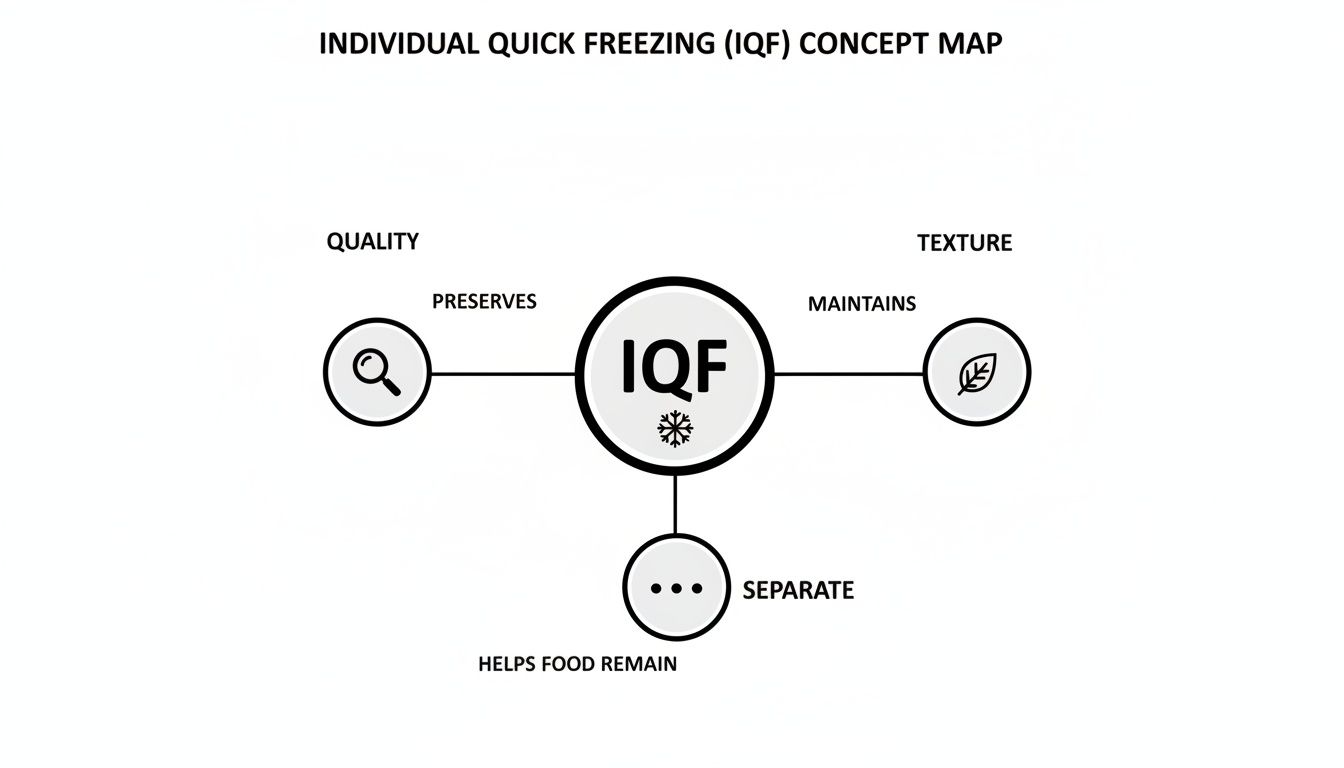
As the map shows, the key benefits of IQF—better quality, preserved texture, and keeping pieces separate—all trace back to this fundamental principle of freezing incredibly fast.
Pulling off this microscopic magic trick requires precise control over a few key physical parameters. It's a finely tuned balancing act where temperature, airflow, and time all have to work together perfectly to prevent cellular damage.
These are the critical factors at play:
Getting these variables right is everything. If you're interested in the mechanics behind it all, you can learn more about how cryogenic freezers work and see these principles in action.
This obsession with what happens at the microscopic level has huge, real-world consequences. For food, preserving the cellular structure means locking in the natural texture, flavour, and nutrients. A frozen strawberry that was flash-frozen tastes and feels almost exactly like a fresh one because its internal framework is still intact.
The ultimate goal of the individually quick frozen iqf process is to suspend biological items in a state of preserved animation. By forming microcrystals instead of large, damaging ones, the technology ensures that what you thaw is nearly identical to what you froze.
This principle becomes even more vital in biotech and medicine. For biobanks storing precious tissue samples or labs shipping cell therapies, viability is the only thing that matters. A punctured cell is a dead cell, making a sample worthless for research or treatment. The incredibly high cell viability rates achieved with rapid freezing—often exceeding 90%—are a direct result of this microscopic science. This makes IQF-related cryogenic techniques an absolutely essential tool for modern medicine and research, where every single cell counts.
The science behind individually quick frozen iqf technology is surprisingly versatile, bridging the gap between two very different worlds: the bustling consumer food market and the high-stakes field of biotechnology. On the surface, a bag of frozen berries and a vial of therapeutic cells couldn't be more different. Yet, the core goal is exactly the same.
Both industries rely on rapid, individualised freezing to preserve quality, integrity, and function right down to the microscopic level. In one scenario, IQF ensures a home cook can easily grab a handful of shrimp for dinner. In another, it guarantees a scientist can thaw a single, viable cell sample for a critical experiment without disturbing the rest of the batch.
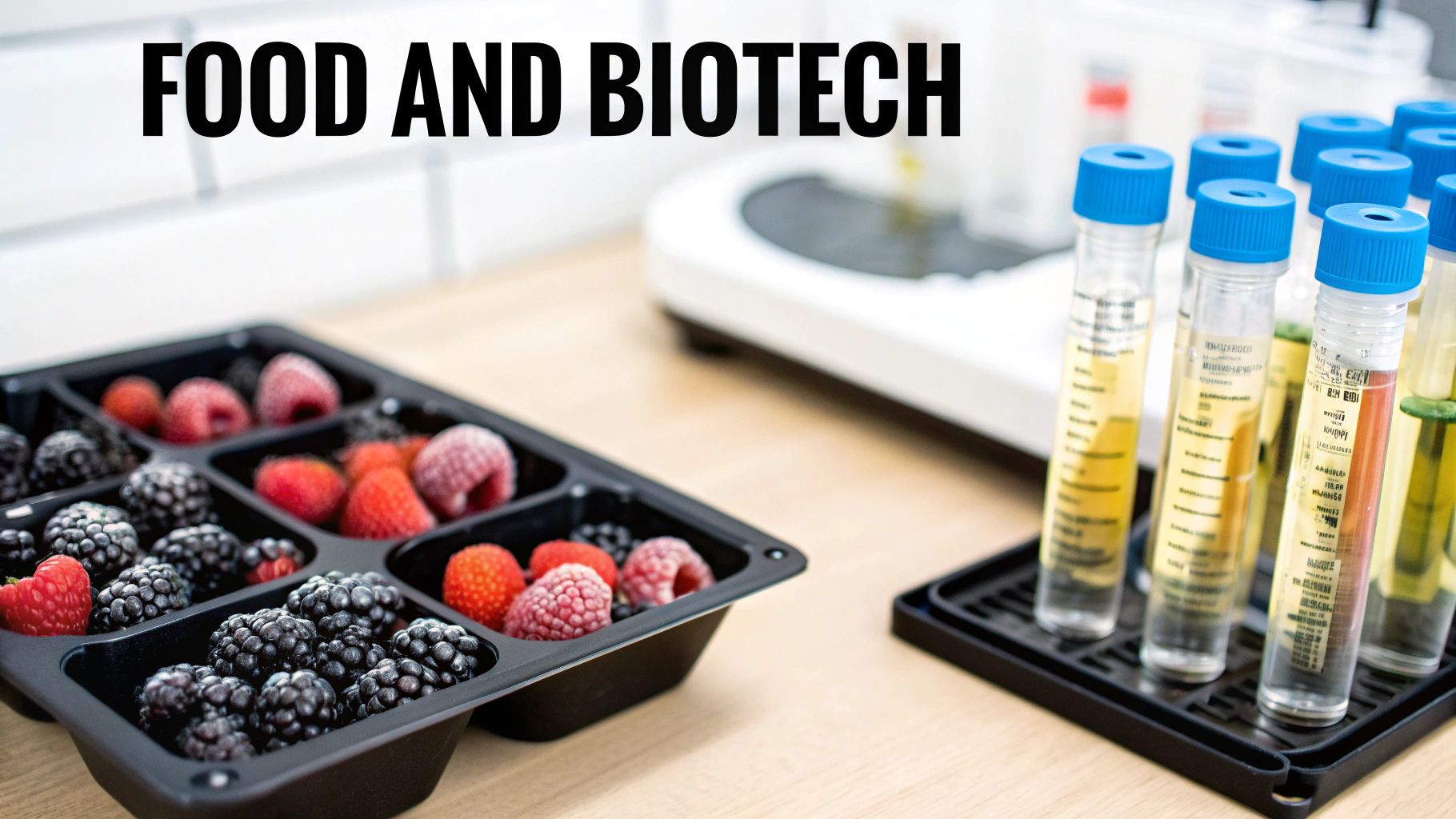
In the food industry, IQF is simply the gold standard for premium frozen goods. It completely changed the game, offering consumers products that kept their fresh-picked texture, flavour, and nutritional value. The free-flowing nature of IQF products also solved one of the biggest headaches for home cooks—the dreaded frozen block—making portion control effortless and cutting down on food waste.
You can see this impact in market trends across Europe. Germany's frozen food sector, which leans heavily on IQF, was worth USD 23,318.1 million in 2023 and is on track to hit USD 35,663.0 million by 2030. The incredibly fast crystallisation at speeds up to -40°C locks in freshness so well that it can retain up to 90% more vitamins than older, slower freezing methods. For more on this, you can check out the market insights on Grand View Research.
Common foods where IQF truly shines include:
While IQF is a convenience in the kitchen, it's an absolute necessity in the lab. In biotechnology, the same principles are applied with even more precision to protect priceless biological materials. Here, the goal isn’t just about maintaining texture, but ensuring the literal survival and functional viability of cells and tissues once they’re thawed.
The core promise of the individually quick frozen iqf method in biotechnology is sample integrity. For biobanking, cell therapy, and pharmaceutical research, the ability to freeze individual vials or samples without clumping or cellular damage is non-negotiable for ensuring reliable scientific outcomes and therapeutic effectiveness.
This level of precision is fundamental for several key areas.
Biobanks are like biological libraries, holding vast collections of human, animal, or plant specimens for future research. Every single sample is a precious resource. Using rapid, individualised freezing ensures that:
In fields like regenerative medicine, the therapeutic product is living cells. Getting these treatments from the manufacturing site to the patient is a complex logistical puzzle where temperature is everything. The principles of individually quick frozen iqf are adapted for cryogenic shipping to:
From preserving the flavour of a strawberry to safeguarding the potential of a life-saving cell therapy, the fundamental science of rapid freezing proves its incredible importance. As these applications become ever more sophisticated, the demand for reliable cryogenic solutions will only continue to grow.
Getting the kind of precise, lightning-fast cooling needed for the individually quick frozen iqf method doesn't happen by accident—it’s the result of specialised, powerful equipment. This infrastructure is the engine driving the entire process, whether you're in a massive food production facility or a high-stakes biomedical lab. At the core of any IQF setup is the freezer itself, a system engineered for maximum speed and efficiency.
The type of freezer you'll find is often dictated by the product's size, shape, and how fragile it is. Each design has its own unique way of exposing every surface of an item to intense cold, making sure the freeze is uniform and almost instantaneous. Getting to know these systems is key to understanding why IQF delivers such superior results.
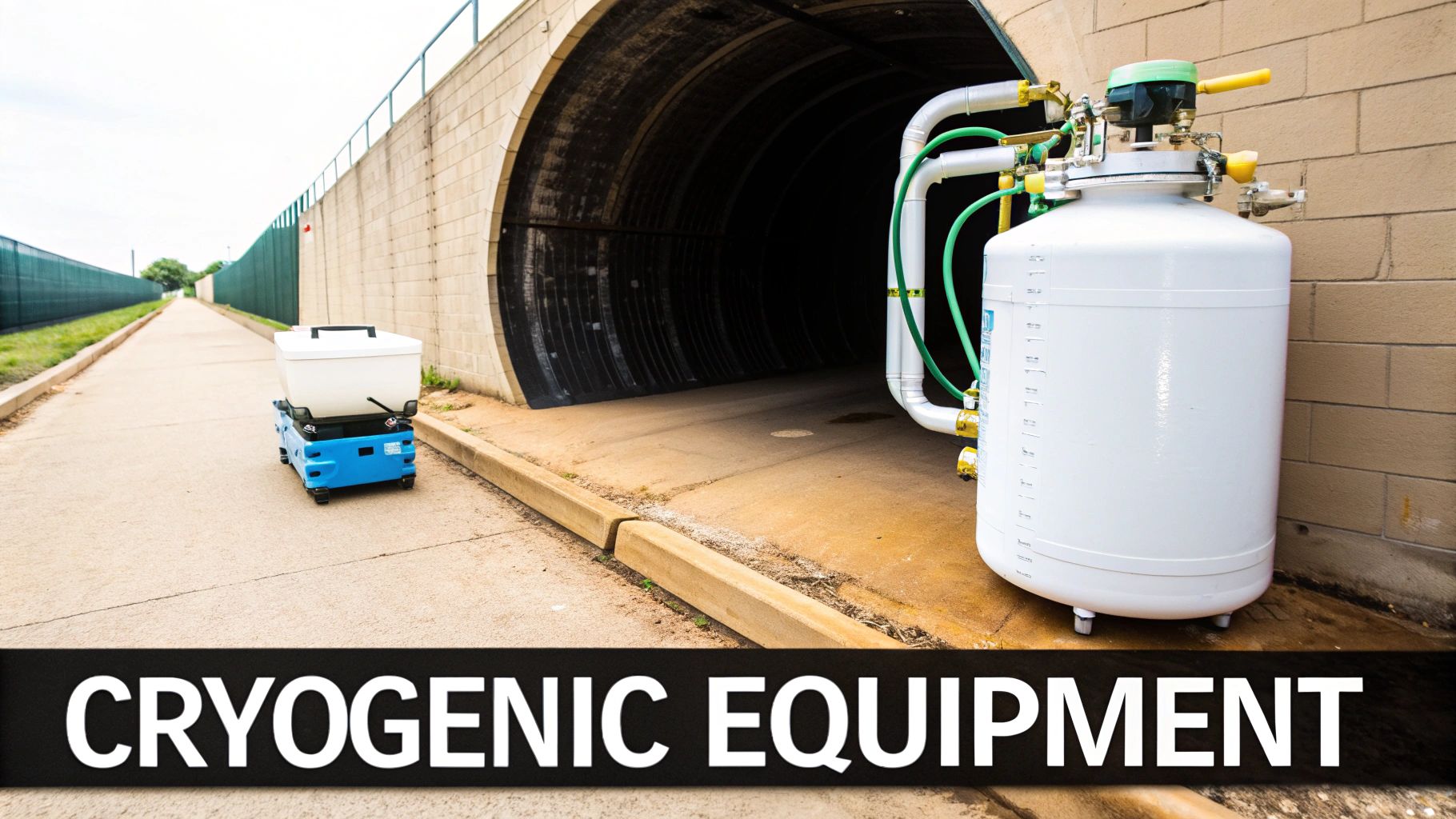
While there are plenty of variations out there, most industrial and lab-based IQF systems fall into a few main categories. Each is fine-tuned to handle specific products, from delicate berries and critical biological samples to robust cuts of meat.
Tunnel Freezers: Think of these as the workhorses of the IQF world. Products ride on a conveyor belt through a long, insulated tunnel where high-velocity cold air or cryogenic gas blasts over them. Their straight-line design is perfect for high-volume, continuous processing of sturdy items like diced vegetables or shrimp.
Spiral Freezers: Picture a tunnel freezer coiled up into a compact, vertical tower. Spiral freezers use a long, continuous belt that winds its way up or down, giving you a very long freezing path in a tiny footprint. This design is a lifesaver for facilities with limited floor space and for products that need a bit more time to freeze completely.
Fluidized Bed Freezers: This is arguably the most elegant design for small, lightweight products. In these systems, a powerful upward jet of frigid air actually lifts and suspends the items—like peas or corn—causing them to float and tumble as if they were in a fluid. This "fluidisation" guarantees every single piece is frozen individually and evenly with incredible speed.
Another powerful method for rapid cooling, which shares the goal of preserving quality with IQF, is the commercial blast chiller.
That incredible cold doesn't just appear out of thin air. It’s delivered by a robust and reliable cryogenic infrastructure, which is the true backbone of any high-precision freezing operation. The star player here is liquid nitrogen (LIN).
With a boiling point of -196°C, liquid nitrogen provides the intense chill needed to achieve the rapid temperature drop that defines the individually quick frozen iqf process. A dependable supply of LIN isn't just a "nice-to-have"; it's non-negotiable for keeping operations running and protecting the integrity of valuable products, whether they're food items or priceless biological samples.
A seamless cryogenic ecosystem is more than just a convenience—it's a critical safety net. An interruption in the supply of liquid nitrogen can lead to catastrophic product loss, compromised sample viability, and significant operational downtime.
This ecosystem is made up of several interconnected components working in harmony.
Together, these pieces form an integrated system that ensures the uninterrupted, efficient, and safe operation of any individually quick frozen iqf process, safeguarding product quality from start to finish.
In high-stakes science and medicine, sample integrity isn't just a goal; it's the entire foundation. Having the latest individually quick frozen iqf equipment is a great start, but without a rock-solid framework of best practices, it’s only half the battle. True quality and compliance are built on a meticulous process that governs every single stage.
This thinking needs to start long before a sample ever feels the cold. It begins with standardised preparation protocols and extends across the whole cold chain, demanding complete traceability through smart inventory systems and non-stop temperature monitoring.
A workflow you can stand behind is built on control, verification, and documentation. Every step must be carefully designed to slash risks and ensure the final sample is not only viable but that its associated data is absolutely reliable. For anyone in food processing, understanding the comprehensive HACCP food safety principles is essential, and their core logic—identifying and controlling hazards—translates perfectly to biotech environments.
Key stages in a compliant workflow include:
Knowing a sample’s exact location, history, and condition at all times isn’t a "nice to have"—it’s a must. Regulatory bodies like the FDA and EMA demand a complete chain of custody, and it's what gives everyone confidence in the research outcomes.
Traceability is the bedrock of quality management in cryogenic applications. It’s not just about slapping a label on a vial; it’s about creating an unbroken chain of data that follows a sample from collection to its final use, guaranteeing its authenticity and integrity.
To make this a reality, organisations need a robust inventory management system. This usually means using barcoded or RFID-tagged vials linked to a central database. The system has to meticulously track every single action—who touched the sample, when it was moved, and its precise spot in the freezer.
At the end of the day, the integrity of your samples is directly tied to the quality of your hardware. Using medically licensed and compliant equipment isn't an option—it's a requirement. This is especially true for the transport vessels used to move sensitive biological materials between labs or out to clinical sites.
This focus on high-precision preservation is fuelling massive growth in the sector. By 2025, the Individually Quick Freezing (IQF) segment is on track to take up 42.0% of the entire EU frozen food demand. Germany is a major player here, with its IQF market expected to jump from USD 2,035.5 million in 2024 to USD 3,433.48 million by 2033. This isn't just growth; it's a powerful shift toward the kind of high-precision methods we're talking about. You can find more insights about this trend in the EU frozen food market.
Sticking to these best practices ensures that the principles behind individually quick frozen iqf technology are put to work effectively, protecting sample quality and keeping your operations running smoothly.
Translating the science of rapid freezing into a practical, reliable setup comes down to one thing: choosing the right cryogenic tools for the job. There's no one-size-fits-all answer here. The ideal solution depends entirely on your specific needs, your scale, and the precious samples you're handling. A massive biobank has vastly different requirements than a small university lab or a logistics provider moving time-sensitive cell therapies.
Making the right choice is a balancing act between capacity, performance, and compliance. It’s about building an infrastructure that protects your valuable biological materials without compromise and creating a seamless workflow, from the first moment of preservation to long-term storage or transport.
The first step is to get crystal clear on your primary mission. Different roles within the scientific and medical communities have distinct priorities, and these directly influence what equipment makes sense for you. Once you understand your specific context, you can zero in on the features that truly matter.
Let's look at a few common scenarios:
The Biobank Manager: Your world revolves around long-term, high-capacity storage. You need large, stationary freezers with gold-standard evaporation rates to keep liquid nitrogen consumption—and costs—to a minimum over years, or even decades. Your key metrics are efficiency, rock-solid sample security, and the ability to scale up as your collection grows.
The Cell Therapy Logistics Provider: You're responsible for that critical journey from the lab to the clinic. Your focus is squarely on secure, mobile preservation. This means you need ADR-licensed transport vessels certified for road transport, capable of maintaining stable temperatures for days on end, and offering robust traceability features.
The University Researcher: Your needs are often on a smaller, more flexible scale. You might just need a dependable lab-scale freezer to store samples from your ongoing experiments. For you, the most important factors are a compact footprint, ease of use, and reliable performance without the huge capacity of an industrial biobank.
The right cryogenic solution is one that aligns perfectly with your operational demands. It's not just about temperature; it's about capacity, mobility, regulatory compliance, and long-term reliability.
Once you’ve identified which profile fits you best, you can start digging into the technical specifications. Thinking through these factors will guide you to a smart, informed decision. For a more exhaustive look, our guide on what to consider before buying cryogenic equipment offers a detailed checklist.
Here are the essential criteria to evaluate:
By carefully weighing these points against your specific role—whether you’re managing a vast library of samples or ensuring the safe transit of a single patient's therapy—you can build a cryogenic infrastructure that is not only powerful but perfectly suited to your mission.
Of course. Here is the rewritten section, crafted to sound like an experienced human expert, following all the provided style guidelines.
When you're dealing with sensitive biological samples or large-scale food production, getting the details right on freezing technology is crucial. Let's walk through some of the most common questions people have about Individually Quick Frozen (IQF) methods to clear things up.
The biggest difference comes down to two things: speed and separation. Your standard freezer works slowly, allowing items to clump together into a solid block. This slow process gives large, jagged ice crystals time to form, which act like tiny knives, piercing and shredding cell walls. The result? When you thaw it, the texture is ruined, and quality is lost.
IQF, on the other hand, is all about ultra-rapid cooling that freezes every single item on its own. Because it's so fast, those damaging ice crystals never get a chance to grow. This keeps the cellular structure intact and ensures the final products—whether they're peas or precious cell lines—stay separate and free-flowing. It's like the difference between getting hit with big, chunky hailstones versus being covered in a fine, delicate frost.
For food, the answer is almost always no. In fact, you'll get much better results if you don't. Cooking IQF vegetables, fish, or chicken straight from the freezer is the best way to preserve their texture and stop them from getting soggy. Thawing first just lets all the moisture out, which often leads to a mushy meal.
When it comes to biological samples, however, the thawing process is an entirely different beast. It's a highly controlled and critical step that has to follow a precise, validated protocol to keep the cells alive and viable. Thawing these samples improperly can be just as destructive as freezing them slowly in the first place.
IQF is a powerful tool for cutting down on waste all along the supply chain. It dramatically extends the shelf life of perishable items, turning something that might last days into a product that can last for months. This means less spoilage on the farm, in transit, and in our own homes.
One of the most practical benefits of the Individually Quick Frozen (IQF) method is how it changes resource management. It lets you use exactly what you need and safely store the rest with no drop in quality. That kind of precise portion control makes a huge dent in waste, which ultimately lightens the carbon footprint of producing and disposing of food.
They often are, and in some cases, they can be even more nutritious. Most IQF products are processed and frozen just hours after being picked or harvested, which essentially locks in their nutrients at the moment of peak freshness.
"Fresh" produce, by contrast, can spend days or weeks in transit and storage before it ever makes it to your plate. During that time, it's constantly losing vitamins and minerals. The rapid freezing of IQF is incredibly efficient at preserving these nutrients. Studies have shown that IQF foods can retain up to 90% of their original vitamin content, making them a fantastic, nutrient-dense option any time of year.
At Cryonos GmbH, we provide the state-of-the-art cryogenic solutions required to implement high-precision freezing and storage protocols. Explore our medically licensed and compliant equipment to build a robust infrastructure for your laboratory or biobank at https://www.cryonos.shop.

