
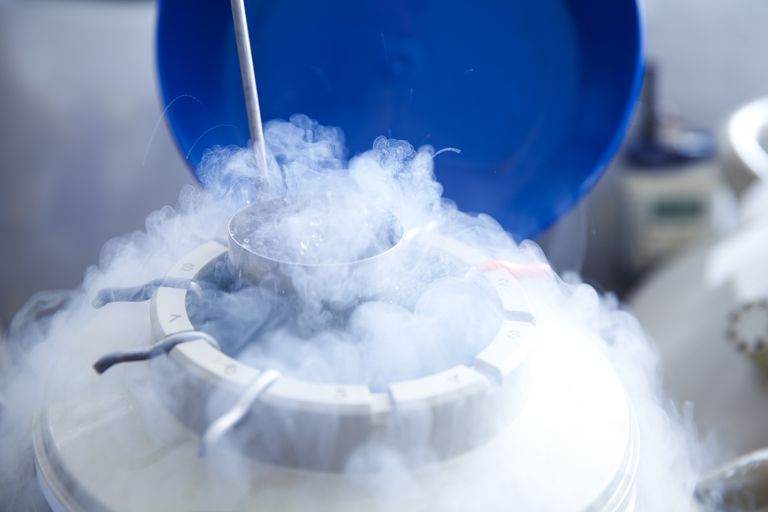

Cryogenics is the production and behavior of materials at extremely low temperatures. The chemical and physical properties of materials have been a key area of interest for researchers. The transition from gas to liquid has encouraged the development of new technologies and industries. Additionally, this has improved people’s understanding of new materials.
The temperature of a material is proportional to the measure of its energy. Cryogenic temperatures range from about –150 to –273.15 degrees Celsius, with –273.15 °C (0 K) representing the theoretical limit known as absolute zero. At this point, the thermal motion of molecules would nearly stop, allowing them to reach their lowest possible energy state.
A cryogenic environment typically occurs when a gas begins to condense into a liquid. Some of the common gases that liquefy under cryogenic conditions include oxygen, helium, nitrogen, and hydrogen. Liquid gases at or below –150 degrees Celsius are usually used for freezing other materials and enabling advanced technological applications.
The History Of Cryogenics
The term "Cryogenics" originates from the Greek word "κρύος" (kryos), meaning "frost" or "cold," and the suffix "-genics," meaning "production." Literally, cryogenics means "the production of cold."
Kelvin (K) is the official base unit of temperature in the International System of Units (SI). The Kelvin scale was introduced by William Thomson, better known as Baron Kelvin. He proposed an absolute temperature scale because conventional scales such as Celsius or Fahrenheit are based on the material properties of water, which are unsuitable for extremely low temperatures.
The theoretically lowest possible temperature is 0 Kelvin (K), which corresponds to –273.15 degrees Celsius (°C). This is referred to as absolute zero. At absolute zero, the thermal motion of particles comes to a near-complete halt. However, according to the third law of thermodynamics, it is impossible to exactly reach absolute zero; it can only be approached arbitrarily closely.
Historical Milestones in Cryogenics
In 1877, Louis Cailletet in France and Raoul Pictet in Switzerland independently succeeded in liquefying oxygen for the first time. Oxygen liquefies at around 90 K (–183.15°C).
Soon after, nitrogen was also liquefied at approximately 77 K (–196.15°C). These successes sparked a global scientific race to lower the temperature of substances even further in an attempt to approach absolute zero.
In 1898, James Dewar was the first to liquefy hydrogen at a temperature of about 20 K (–253.15°C). Storing such extremely cold liquids posed a significant challenge, which led Dewar to develop the Dewar flask, a double-walled, evacuated vessel design still used as an insulation container today.
Another significant breakthrough came in 1908 when Heike Kamerlingh Onnes succeeded in liquefying helium at 4.2 K (–268.95°C). This marked a crucial moment in the history of cryogenics. Later, by reducing the pressure, helium was even cooled to temperatures around 3.2 K (–269.95°C).
Application Of Cryogenics
Cryogenics is applied across a wide range of fields, from medicine to space exploration to the food industry. It plays a critical role in food preservation, medical research, aerospace engineering, and superconducting technology. The continuous development and application of this technology continue to offer innovative solutions and enable new discoveries in various areas. Here are some of the key applications:

-
Cryogenic Freezing of Food
Cryogenics is used to preserve food by quickly freezing it with liquid nitrogen or other cryogenic fluids. This rapid freezing helps preserve the cell structure of the food and maintain its quality by preventing the slow formation of ice crystals. This method is primarily used in the food industry to store fresh products for extended periods without losing nutrients, textures, or flavors.
Cryosurgery
Cryosurgery utilizes extremely low temperatures to destroy unwanted or diseased tissue. By freezing the cells, ice crystals form inside, which destroys the cells and leads to the breakdown of the tissue. This technique is commonly used to treat skin cancer, benign tumors, and warts. Cryosurgery is considered a minimally invasive method, with fewer side effects and shorter recovery times.
Magnetic Resonance Imaging (MRI) and Superconductivity
Magnetic Resonance Imaging (MRI) requires extremely strong magnetic fields, which are generated by superconducting magnets. These magnets must be cooled with liquid helium or other cryogenic fluids, as superconductors only exhibit their unique ability to conduct electricity without resistance at extremely low temperatures. Cryogenics is therefore essential for the operation of modern MRI scanners, which are widely used in medicine.
Cryogenics in Aerospace Engineering
In aerospace engineering, cryogenics is used to supply rockets with liquid propellants such as liquid hydrogen and liquid oxygen, which must be stored at extremely low temperatures. These propellants provide the necessary energy for rockets and spacecraft. Cryogenics also plays a role in cooling spacecraft and generating artificial levitation in special experiments in space.
Cryotherapy
Cryotherapy refers to the application of extremely low temperatures to the human body for the treatment of inflammation, pain, and to promote the healing of muscle injuries. The body is exposed to intense cold through ice baths, cryochambers, or targeted applications of liquid nitrogen. The therapy helps improve blood circulation, accelerate the healing process, and relieve muscle tension. Cryotherapy is increasingly used in sports medicine for pain relief.
Cryoelectronics
In cryoelectronics, extremely low temperatures are used to enhance electron movement in various materials. At very low temperatures, electrical resistance decreases, causing superconductors to lose their resistance to electric current. This technology has applications in space exploration, particle accelerators, and quantum computing, where precise control of electrical currents at extremely low temperatures is necessary.
Cryogenic Freezing of Blood and Tissue Samples
The storage of biological samples such as blood or tissue is another important application of cryogenics. These samples are frozen at extremely low temperatures to preserve them for later medical examinations or transfusions. This is especially important for medical research, as it allows stem cells, blood banks, and tissue samples to be stored over long periods without compromising their quality.
Applications in In-Vitro Fertilization (IVF)
In In-Vitro Fertilization (IVF), cryogenics is used to preserve eggs, sperm, and embryos. These samples are stored through cryogenic freezing at very low temperatures to maintain their viability for future treatments. Cryogenics thus plays a crucial role in fertility treatments, allowing these samples to be stored for extended periods without deteriorating in quality.
Superconductivity and Magnetic Applications
Cryogenics is used to cool superconductors that are employed in applications such as magnets for particle accelerators, MRI scanners, and magnetic levitation systems. Superconductors are materials that, at extremely low temperatures, exhibit no electrical resistance, making them ideal for generating strong magnetic fields. These magnetic fields are used in medicine, research, and modern transportation technologies.
Handling Cryogenic Liquids
Cryogenic liquids are extremely cold substances that require special safety precautions. They should only be handled by individuals who are fully aware of the potential hazards and specific properties of these liquids. Improper handling of cryogenic liquids can cause serious injuries, including frostbite, skin and tissue damage, and respiratory problems due to oxygen deficiency in the air. Therefore, comprehensive safety measures are essential. Here are some key precautions:
Protective Equipment: When handling cryogenic liquids, appropriate protective equipment must be worn to prevent direct contact with the skin or eyes. This includes insulated gloves, safety goggles, face shields, and sturdy footwear. Additionally, thermally insulated protective clothing and special cryogenic covers for the body are required to protect against cold burns.
- Ventilation and Oxygen Monitoring: Cryogenic liquids such as liquid nitrogen and oxygen can dangerously reduce the oxygen concentration in a room, leading to a risk of suffocation. Therefore, areas where these liquids are used or stored must be equipped with an effective ventilation system that guarantees an adequate supply of fresh air. Additionally, the use of gas sensors and oxygen monitors is necessary to ensure continuous monitoring of air quality.
Emergency Measures and First Aid: It is crucial that all personnel working with cryogenic liquids are familiar with emergency protocols. In the event of a spill or accident, immediate action must be taken. First aid measures, such as the prompt removal of contaminated clothing, treatment of frostbite injuries, and ensuring rapid medical assistance, are of utmost importance. A good understanding of emergency procedures can be life-saving in such situations.
Storage and Transportation: Cryogenic liquids must be stored in specially designed, insulated containers, such as Dewar vessels. These containers prevent the liquids from evaporating and ensure that no hazards arise from overpressure or unintended release. Moreover, the transportation of cryogenic liquids is highly regulated to ensure that no risks are posed to the environment or to human health.
The responsible handling of cryogenic liquids requires thorough training, regular safety inspections, and the consistent application of protective measures to minimize potential hazards and ensure that the benefits of cryogenic technologies can be utilized without unnecessary risk.
Economic Significance of Cryogenics
Cryogenics is not only a significant technological field but also an important driver of economic growth across various industries. The applications of cryogenics open new markets and offer potential for innovation and development in numerous sectors. Some of the key economic benefits of cryogenics include:
Fostering Innovation in High-Tech Industries: The use of cryogenics has led to the emergence of new industries, such as quantum computing and superconductivity. These technologies are highly advanced and require specialized cryogenic solutions, resulting in an increased demand for related products and services.
Growth in the Medical and Food Industries: Cryogenic processes like the cryopreservation of cells, tissues, and food not only offer longer shelf life but also enable the development of new treatment methods and improved food preservation. This creates new jobs and business opportunities in both healthcare and the food industry.
Resource Conservation and Efficiency Enhancement: In many applications, such as food storage or medical research, cryogenics helps reduce losses and maximize resources. This positively impacts operational efficiency and associated costs, contributing to economic benefit.
Overall, cryogenics has the potential to act as an innovation driver for various industries, creating new jobs and markets that will contribute to the stability and growth of the global economy in the long term.
Conclusion
Cryogenics is much more than just a scientific field dealing with extremely low temperatures; it has become a key factor in numerous industries. From medical research and treatment to food preservation and aerospace technology, it plays a central role in developing new technologies and solutions. Its economic significance is undeniable, as it not only transforms existing industries but also opens up new opportunities for growth and innovation.
Despite its many advantages, the application of cryogenics also requires careful consideration of safety concerns, as handling extremely low temperatures can be potentially hazardous. Therefore, it is crucial to implement strict safety protocols and utilize modern technologies to minimize risks.
Ongoing research and development in cryogenics will undoubtedly bring even more exciting applications and solutions in the future. In combination with other technological advances, cryogenics will continue to be an indispensable tool for addressing global challenges and fostering innovation in the coming years.
Cryonos – Your Expert Partner for High-Quality Cryogenic Solutions.
Disclaimer
The information provided in this blog post is intended solely for general informational purposes. It does not constitute legal, medical, technical, or safety-related advice and cannot replace personalized professional consultation. Although we compile the content with the utmost care, we make no representations or warranties regarding the completeness, accuracy, or timeliness of the information provided. Use of the information is at your own risk. We expressly disclaim any liability for damages, whether direct or indirect, arising from the use of or reliance upon the information described in this blog. Please always adhere to applicable laws, regulations, standards, and safety guidelines. For specific questions or decisions, always consult qualified professionals.


