No Products in the Cart




Storing oxygen cylinders, or lagerung von sauerstoffflaschen as it's known in technical German, isn't just a box-ticking exercise. The right way involves keeping them upright and secure in a well-ventilated spot, far from any flammable materials or potential sources of ignition. At its heart, the rule is simple: oxygen itself doesn't burn, but it's a powerful oxidiser. This means it can turn a tiny spark into a raging inferno, making strict safety protocols completely non-negotiable.
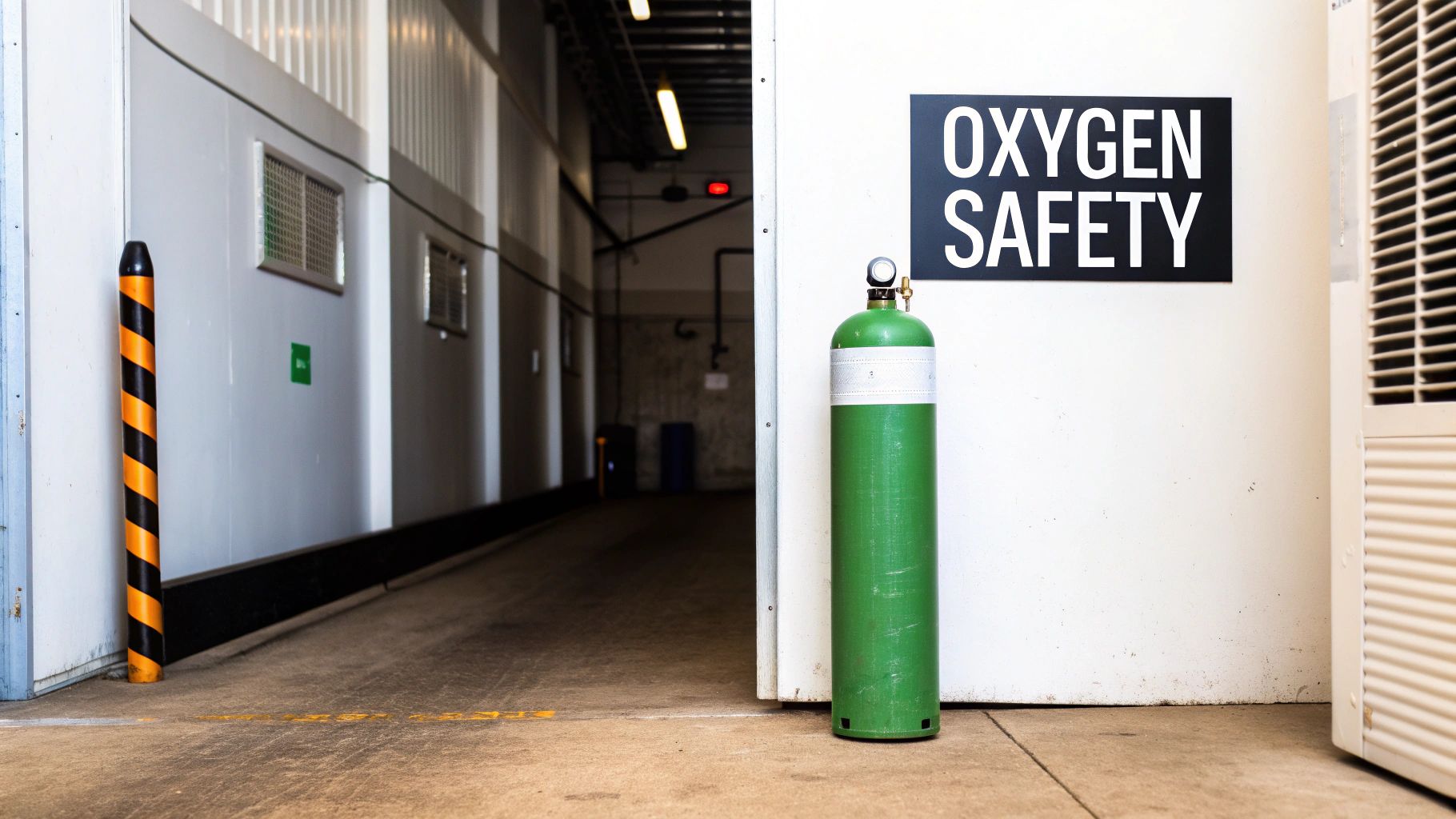
In any industrial, medical, or lab setting, getting oxygen cylinder storage right is one of the most critical safety duties you have. It's so easy to get this wrong. Because oxygen doesn't technically burn, people often get a false sense of security and underestimate the real danger. This is a massive mistake.
The true hazard is its role as an aggressive accelerant. Picture a tiny, glowing ember from a campfire. If you gently blow on it, you're adding more oxygen, and it flares right up. Now, think about that ember being a small spark from some dodgy wiring or grinding work. Instead of a gentle puff of air, imagine it's hit with a concentrated jet of pure oxygen from a leaking cylinder.
What happens next isn't just a bigger fire; it's a violent, almost explosive reaction. Materials you'd normally consider non-combustible can burn ferociously in an oxygen-rich atmosphere. This is the single biggest reason why proper oxygen cylinder storage is so vital.
A slow oxygen leak in a stuffy, poorly ventilated room can quickly push the air's oxygen level from the normal 21% up to 30% or even higher. At these concentrations, the risk of fire and explosion skyrockets. What should have been a minor incident can instantly become a full-blown catastrophe, endangering lives, destroying property, and racking up huge regulatory fines.
To stop this from ever happening, every safety rule for the lagerung von sauerstoffflaschen is built on three core pillars:
Getting to grips with the properties of oxygen is the first real step. For a deeper dive into its specific characteristics, feel free to check out our article on the properties of oxygen. A comprehensive chemical risk assessment is also essential for pinpointing all the potential hazards unique to your workplace.
This knowledge is what turns abstract safety rules into practical, life-saving habits. Once you truly understand that oxygen isn't the fuel but the ultimate accelerant, the need for designated storage areas, clear signage, and careful handling becomes crystal clear. Mastering these protocols isn't just about staying compliant; it's about creating an environment that is fundamentally safe for everyone. This guide will walk you through the practical, in-depth steps you need to take to get there.
Getting to grips with the legal framework is the first step towards compliant oxygen storage. In Germany, the rules for lagerung von sauerstoffflaschen aren’t just gentle suggestions; they're strict, enforceable regulations designed to head off catastrophic accidents before they can happen. Instead of seeing them as a tangled mess of legal jargon, it's better to think of these rules as a practical safety manual, written from decades of hard-won experience.
The cornerstone document you need to know is TRGS 510 (Technische Regeln für Gefahrstoffe), which translates to Technical Rules for Hazardous Substances. This regulation is the definitive guide for storing hazardous materials in portable containers, and it lays out specific, non-negotiable requirements for oxidising gases like oxygen.
At its heart, TRGS 510 is all about minimising risk by tightly controlling the storage environment. It’s designed to prevent a small incident, like a minor leak, from escalating into a full-blown fire or explosion. The regulation isn't there to make your life difficult; it's there to keep everyone safe.
For oxygen cylinders, this means sticking to clear guidelines on where you store them, what you store them next to, and how you secure them. When an inspector walks through your facility, these are the exact points they'll be checking. Understanding them is non-negotiable for both safety and legal compliance.
Key requirements from TRGS 510 include:
One of the most critical aspects of TRGS 510 is the mandatory separation of materials that don't play well together. Oxygen, being a powerful oxidiser, must be physically separated from anything that burns easily—especially flammable gases like propane or acetylene.
The rule of thumb is straightforward: maintain a minimum distance of 3 metres between oxygen cylinders and flammable gas cylinders. This buffer zone is a crucial safety measure that gives you time to react in an emergency and helps prevent a fire from spreading.
What if you just don't have the space for that 3-metre gap? TRGS 510 offers an alternative: a fire-resistant barrier. This could be a solid masonry wall or a specially built partition with at least an F90 fire-resistance rating. That F90 rating means it can withstand fire for a minimum of 90 minutes, buying you precious time.
Ignoring these rules can have devastating consequences. A 2019 fire in a Berlin hospital warehouse, sparked by improper storage near ignition sources, caused over €500,000 in damages and cut off the oxygen supply for 150 patients.
While TRGS 510 is your primary reference, other regulations also come into play. The DGUV (German Social Accident Insurance) offers extra guidance on workplace safety, and various DIN standards specify the technical details for equipment like cylinder racks and securing straps. Think of them as layers of a comprehensive safety system.
It's also worth remembering that similar detailed rules apply when you're moving cylinders, not just storing them. For anyone interested, we've put together a helpful guide covering the regulations for transporting gas cylinders. By understanding how all these rules connect, you can build a facility that isn't just compliant, but fundamentally safe.
Turning regulations like Germany's TRGS 510 into a physical space is where safety theory gets real. Designing a compliant area for the lagerung von sauerstoffflaschen (storage of oxygen cylinders) isn’t about just finding an empty corner. It’s about creating a purpose-built environment that systematically stamps out risk. Think of it as your first and best line of defence against accidents.
The whole process starts with picking the right spot. Your storage zone needs to be a protected island, isolated from common workplace hazards. It has to be located far from any heat sources—we’re talking furnaces, boilers, even intense, direct sunlight. Just as critical is keeping a healthy distance from potential ignition sources like welding stations, grinding areas, or any electrical panels that could throw a spark.
Finally, think about foot traffic. The ideal location is well away from busy corridors, emergency exits, and main walkways. This simple step minimises the chance of an accidental bump from a forklift or a person, which could easily damage a cylinder or its valve.
Once you've scouted the perfect location, the physical nuts and bolts of the space are next. The flooring absolutely must be level to keep cylinders stable and upright. More importantly, it has to be made from a non-combustible material like concrete. Wooden floors or asphalt surfaces are a definite no-go because of their flammability.
Ventilation is another non-negotiable. An oxygen-rich atmosphere is an invisible but incredibly dangerous hazard. Your storage area must have enough ventilation to ensure any leaking oxygen disperses harmlessly before it can cause trouble. For outdoor storage, natural airflow usually does the trick. Indoors, you might need a mechanical ventilation system to guarantee a constant, safe exchange of air.
A critical mistake to avoid at all costs is allowing any contact with oil or grease. Oxygen reacts violently with hydrocarbons, which can lead to spontaneous ignition. This means the storage area must be kept meticulously clean, and staff should never handle cylinders with greasy gloves or tools.
Now, let's talk about organising the cylinders within that space. A disorganised jumble of cylinders isn't just inefficient; it's a disaster waiting to happen. The most basic and essential system you can implement is separating full cylinders from empty ones. This simple practice prevents the nightmare scenario of someone grabbing an empty tank during a critical application.
Designate separate, clearly marked zones for "Full" and "Empty" cylinders. Not only is this safer, but it also makes inventory management a breeze. Every single cylinder, whether full or empty, must be secured in an upright position. Use chains, sturdy straps, or specially designed racks to stop them from ever falling over.
The flowchart below neatly sums up the core principles from German regulations that should guide your layout.
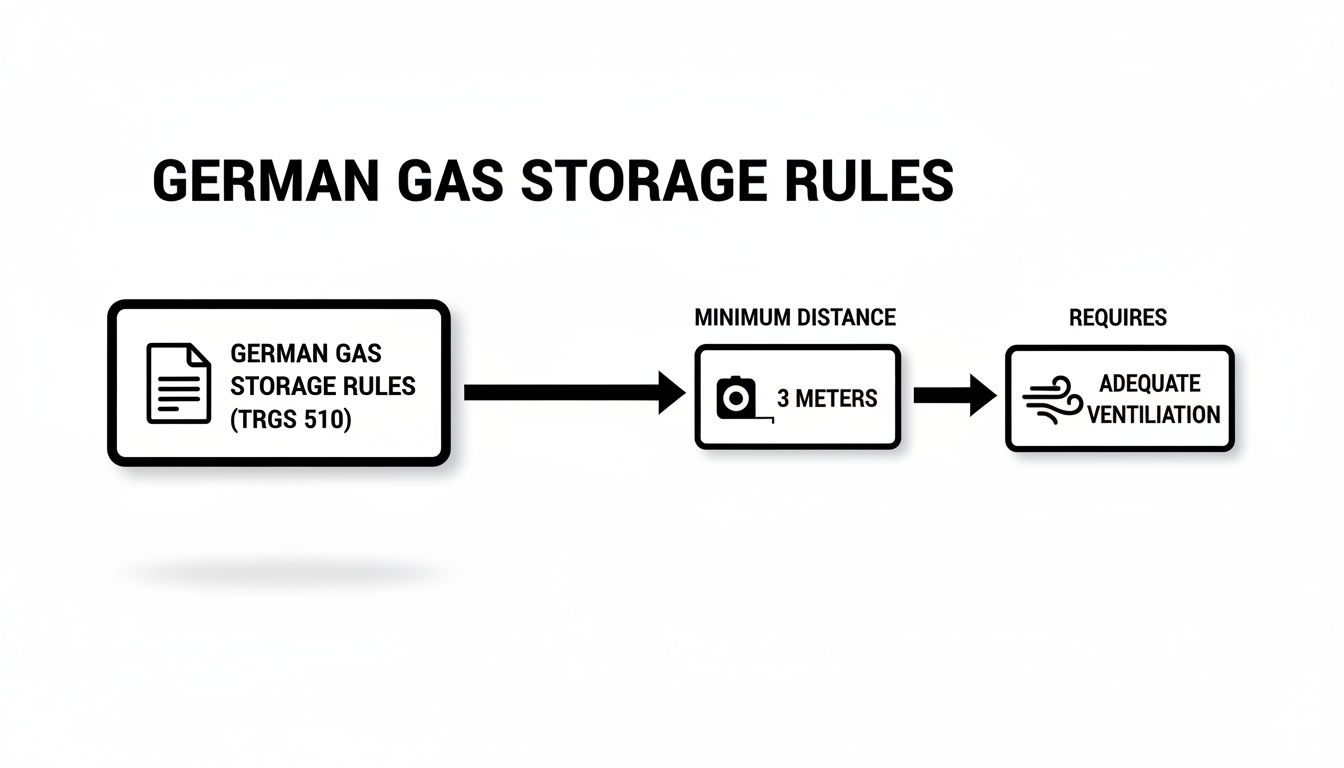
As you can see, it all boils down to a few foundational rules: stick to TRGS 510, maintain at least a 3-metre separation from combustibles, and make sure you have proper ventilation.
To make this even more practical, we've put together a checklist covering the essential design requirements for your storage area, based on these key regulations.
| Requirement | Specification | Why It Matters |
|---|---|---|
| Location | Away from heat, ignition sources, high traffic, and emergency exits. | Prevents accidental ignition or physical damage to cylinders. |
| Flooring | Level and constructed from non-combustible material (e.g., concrete). | Ensures cylinder stability and eliminates a potential fuel source. |
| Ventilation | Adequate natural or mechanical airflow to prevent oxygen enrichment. | Disperses potential leaks to avoid creating a fire hazard. |
| Securing Cylinders | All cylinders must be stored upright and secured with chains, straps, or racks. | Prevents tipping, which can damage valves and cause rapid gas release. |
| Separation Distance | Minimum 3-metre distance from flammable materials, especially oils/greases. | Oxygen acts as an accelerant; this distance creates a crucial safety buffer. |
| Segregation | Separate, clearly marked areas for "Full" and "Empty" cylinders. | Prevents operational mix-ups and improves inventory control. |
| Signage | Highly visible "No Smoking" and "Oxidising Gas" warning signs posted clearly. | Alerts everyone in the vicinity to the specific hazards present. |
| Access Control | Area should be secured to prevent entry by unauthorised personnel. | Restricts access to trained individuals, reducing the risk of mishandling. |
Following this checklist is the best way to ensure your storage area is not just compliant on paper, but fundamentally safe for everyone on site.
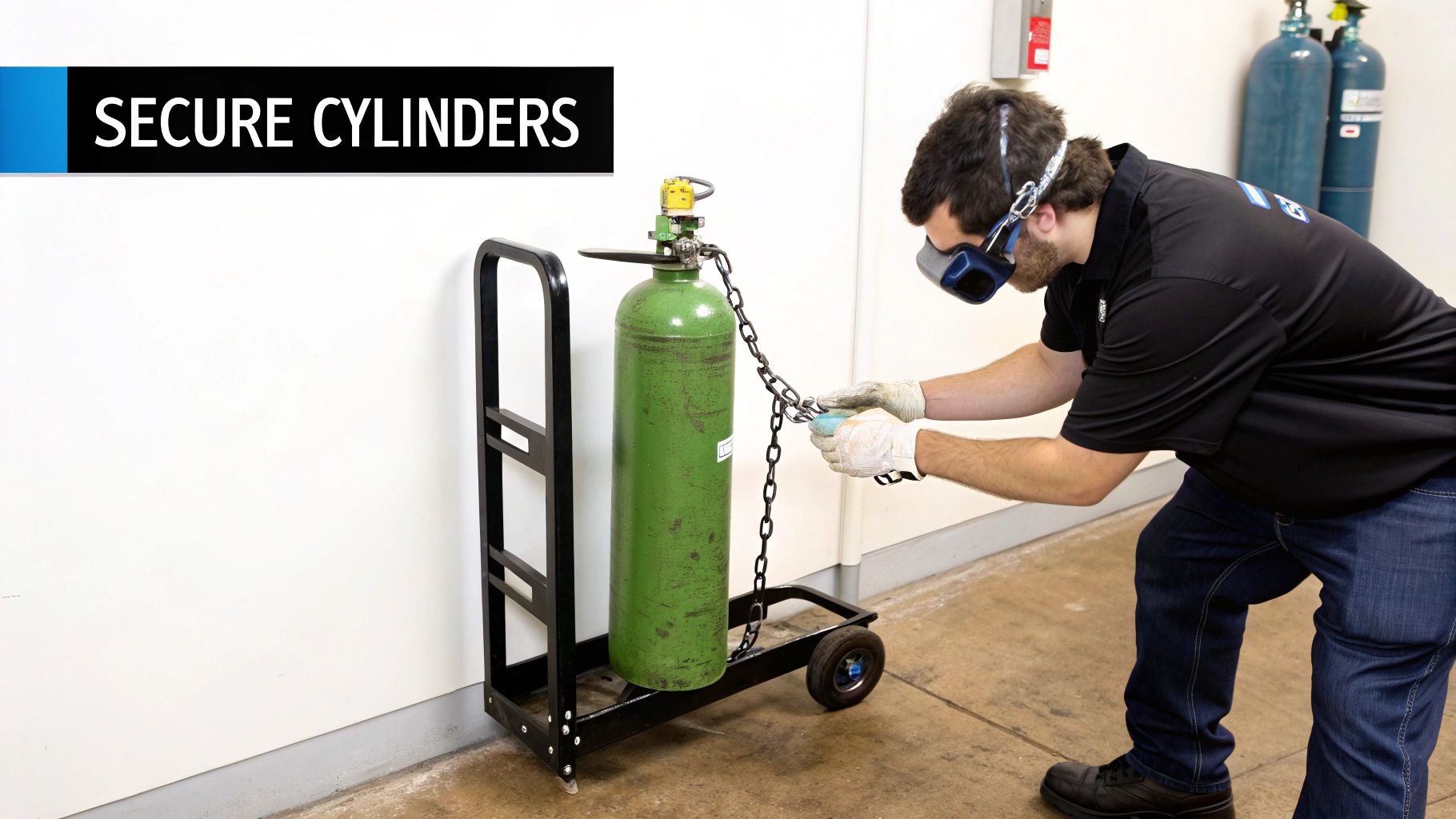
A properly secured cylinder is a safe cylinder. While designing the perfect storage area is a crucial first step, it’s the day-to-day handling that truly defines a strong safety culture. A single mistake—a dropped cylinder or an unsecured valve—can have immediate and devastating consequences.
Think of a full oxygen cylinder not just as a container, but as a vessel holding immense stored energy. If it topples and the valve shears off, that cylinder can instantly become an unguided, high-velocity projectile capable of punching right through concrete walls. This isn't an exaggeration; it's a well-documented hazard that makes proper handling an absolute, non-negotiable priority.
This section shifts our focus from stationary storage design to the dynamic actions of moving and securing cylinders. These are the hands-on, practical skills that prevent the most common—and most dangerous—handling errors associated with the lagerung von sauerstoffflaschen.
The golden rule for any stationary cylinder is simple: prevent it from falling over. Whether it's in the main storage area, at its point of use, or waiting for transit, an upright and secured cylinder is non-negotiable.
The best way to achieve this is with physical restraints that anchor the cylinder to a solid structure, like a wall or a purpose-built rack. This simple action prevents accidental tips from bumps, vibrations, or even minor ground tremors.
Tried-and-true securing methods include:
The goal is total immobility. A correctly secured cylinder should not wobble or shift when you give it a firm push. This simple check can be the difference between a safe workplace and a catastrophic failure.
Sticking to these protocols is a cornerstone of German safety guidelines. In fact, data from the Bundesanstalt für Arbeitsschutz und Arbeitsmedizin (BAuA) shows that from 2015 to 2023, strict enforcement of TRGS 407 helped reduce oxygen-related accidents by a significant 25%. The alternative can be costly; a 2022 incident in a Munich pharmaceutical plant, where a single inadequately secured cylinder fell, led to a €200,000 loss and a 48-hour production halt.
Moving a cylinder from storage to its point of use introduces a whole new set of risks. The temptation to roll, drag, or "walk" a cylinder by tilting it on its edge is a dangerous shortcut that must be strictly forbidden. These methods offer almost no control and dramatically increase the chances of a fall.
The only acceptable way to move a cylinder is with a trolley or hand truck specifically designed for the job.
Follow these simple steps for safe transport:
The valve assembly is, without a doubt, the most fragile part of an oxygen cylinder. A direct impact can snap it clean off, leading to a rapid, uncontrolled release of high-pressure gas. This is precisely why every cylinder comes with a sturdy protective valve cap.
This cap isn't just an accessory; it's a critical safety device. It must be screwed on securely at all times when the cylinder is not actively in use. That means during storage, during transport, and any time it isn’t connected to a regulator for immediate operation. Removing it prematurely is a massive, unnecessary risk. For a deeper dive on this essential component, you can learn more about the importance of a protective cap for a gas cylinder in our related article.
By building these fundamental habits—always securing stationary cylinders, always using a trolley for transport, and always keeping the valve cap on—you create a resilient safety system that protects your people, property, and processes.
Keeping your oxygen cylinder storage area safe is an ongoing commitment, not a one-and-done task. A well-designed storage area is your first line of defence against accidents, but it's a proactive inspection schedule and a solid emergency plan that will truly protect your team when things go wrong. This is about building both everyday safety habits and being ready for the worst-case scenario.
Think of it like looking after a car. You don't just fill it with petrol and hope for the best. You regularly check the oil, tyres, and brakes to catch small problems before they lead to a major breakdown. The same logic applies here—routine checks are your best insurance against equipment failure and simple human error.
A consistent inspection schedule helps you spot potential hazards—like slow leaks, corrosion, or damaged gear—long before they become serious. By breaking down your checks into daily, weekly, and monthly tasks, you create a safety rhythm that's both manageable and highly effective. When you're putting this together, it's always a good idea to consult an essential warehouse safety checklist to make sure you're covering all the critical bases.
Daily Checks (Should take less than 5 minutes):
Weekly Checks (A bit more detailed):
Monthly Checks (A comprehensive review):
This kind of systematic approach is non-negotiable for compliance. A 2021 study revealed that in over 500 storage-related audits across Germany, 15% of facilities failed their inspection, mostly due to improper segregation from oils and grease. The resulting fines averaged a hefty €10,000, which really drives home how important—both for safety and financially—these diligent checks are.
Even with perfect inspections, you have to be ready for an emergency. A clear, well-rehearsed response plan is what turns panic into decisive, effective action, drastically minimising risk and potential damage.
Your plan needs to spell out the exact procedures for the most likely scenarios, like a significant gas leak or a fire nearby. Every single person on your team must know their role and be able to act without a second thought.
The first few moments of an emergency are the most critical. A well-trained team that can immediately locate shut-off valves, raise the alarm, and use the correct fire extinguisher can prevent a minor incident from escalating into a full-blown disaster.
Here are the key components your emergency plan absolutely must include:
When you're dealing with the day-to-day practicalities of lagerung von sauerstoffflaschen (oxygen cylinder storage), specific questions always seem to pop up. Let's tackle some of the most common ones we hear. The goal here is to give you clear, direct answers for real-world situations, helping you stay safe and compliant.
Think of this as your quick-reference guide. It’s designed to reinforce the key principles we've covered and give you the confidence to handle any storage challenges that come your way.
This is a big one. According to German regulations like TRGS 510, you absolutely must keep at least 3 metres between your oxygen cylinders and any flammable gas cylinders. That distance is your first and best line of defence against a fire escalating dramatically.
Now, what if your space is tight and you just can't manage that 3-metre gap? You do have another option. You can build a fire-resistant barrier between the two types of gas. This isn't just any wall, though—it needs to be something substantial like solid masonry or a partition with an official F90 fire-resistance rating. This kind of physical barrier effectively isolates one group of cylinders from the other, containing a potential fire and stopping it from spreading.
Yes, and in many cases, it’s actually the preferred method. Storing oxygen cylinders outdoors provides fantastic natural ventilation, which is exactly what you want to quickly disperse any gas from a potential leak. However, you can't just leave them anywhere; the outdoor storage area has to meet some strict safety criteria.
The site must be:
Proper signage is non-negotiable. A compliant oxygen storage area needs clear, easy-to-see warning signs that alert everyone to the hazards inside. These are a cornerstone of workplace safety and must follow German regulations.
The essential signs you'll need are:
These signs have to be placed prominently at every entrance to the storage area. That way, employees, visitors, and even emergency responders know exactly what they're dealing with before they set foot inside the space.
Proper signage isn't just about ticking a regulatory box; it's your first line of safety communication. It instantly tells anyone nearby what dangers are present, which is fundamental to creating a safe environment for everyone.
If you find a leaking cylinder, the first priority is to stay calm and act safely. The very first thing to do is eliminate every potential ignition source in the area. Shut down any equipment that could cause a spark—no exceptions.
If it's safe to get near the cylinder, try gently tightening the valve. Sometimes, that's all it takes. If the hissing sound doesn't stop, or if you can see the leak is coming from the valve body itself, don't try to fix it further. Your next move is to carefully transport the cylinder to a well-ventilated outdoor spot, far from any people, buildings, or things that could catch fire. Once it's there, cordon off the area, put up a warning sign, and call your gas supplier immediately. They have the expertise to handle it from there.
At Cryonos GmbH, we know that safe, compliant storage is the bedrock of any operation that relies on industrial gases. We provide state-of-the-art cryogenic solutions, from storage vessels to transport units, all engineered to meet the highest German and international safety standards. To make sure your facility is ready for anything, explore our range of ADR-licensed and medically-licensed equipment at https://www.cryonos.shop.

